


News
A fascinating topic in our Graduate Colloquium Bioeconomy Lecture Series: Meat of the future – Opportunities and challenges of cultured meat
02.07.2026
A fascinating topic in our Graduate Colloquium Bioeconomy Lecture Series: Meat of the future – Opportunities and challenges of cultured meat
Latest News
24.09.2026
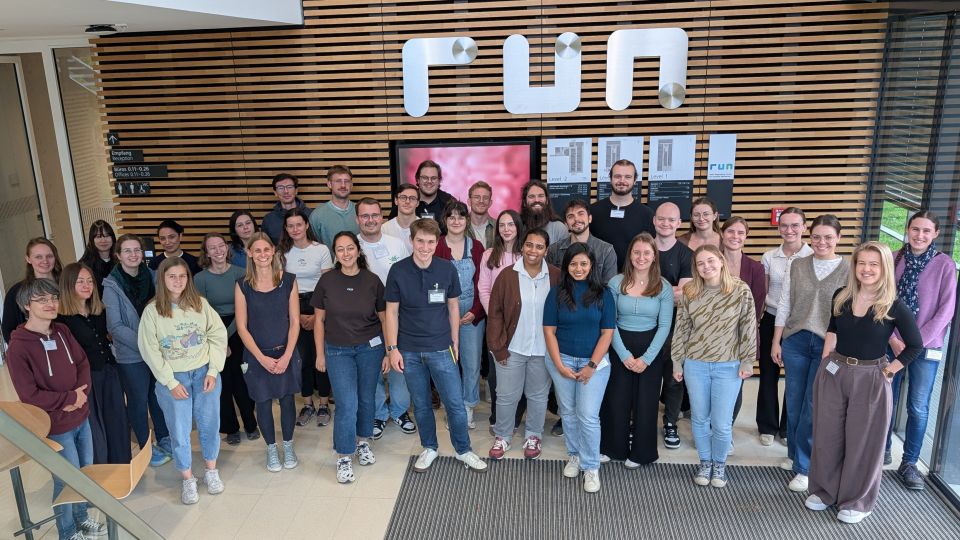
Two Days of Science, Exchange and Team Spirit: This year´s second RIGeL-BioMediGS Summer School
23.09.2026
RIGeL Lecture Series - Current Concepts in Biology, WS 2026/27

31.07.2026
An eventful first half of the year for our PR group
02.07.2026
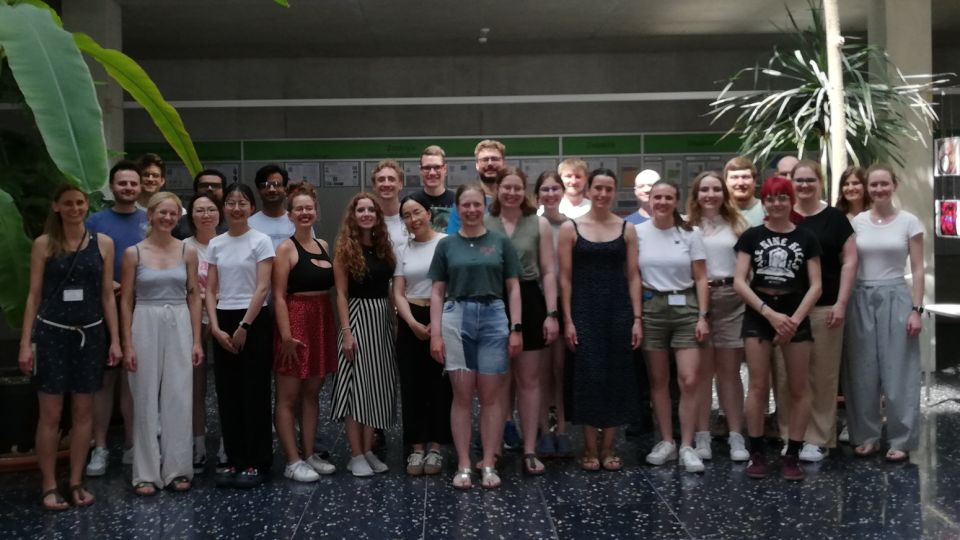
First Summer School 2026: Two inspiring days of science, collaboration, and fun
02.07.2026
A fascinating topic in our Graduate Colloquium Bioeconomy Lecture Series: Meat of the future – Opportunities and challenges of cultured meat
11.05.2026
Bioeconomy Lecture Series – Two insightful talks on plant mechanics and personalized cell engineering
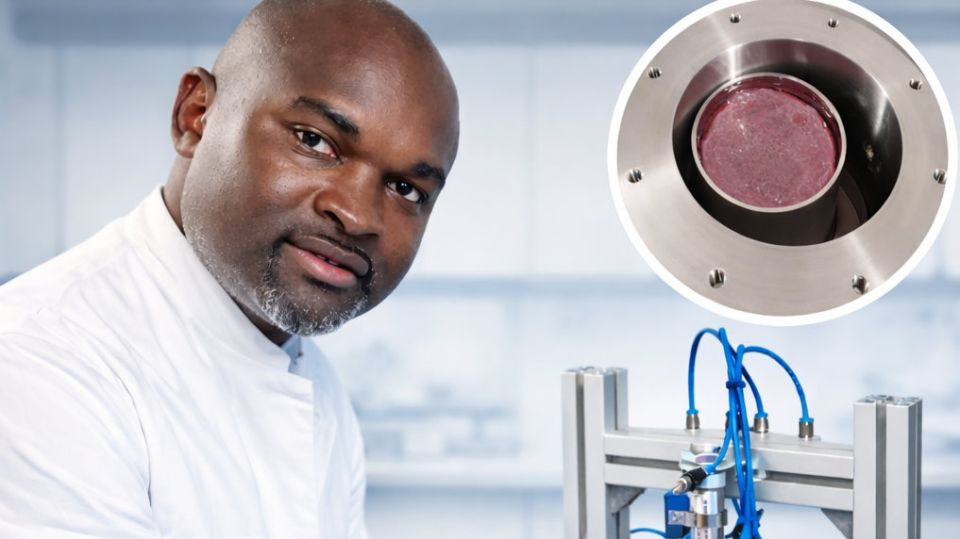
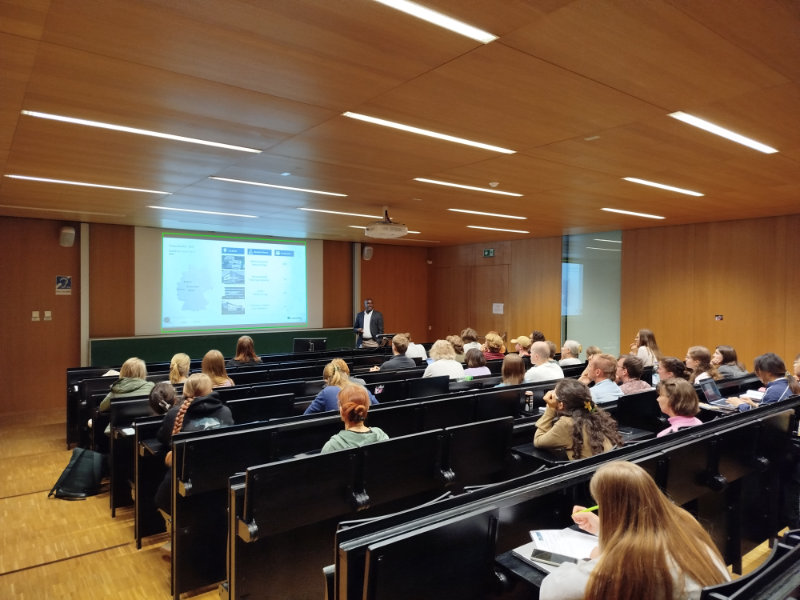
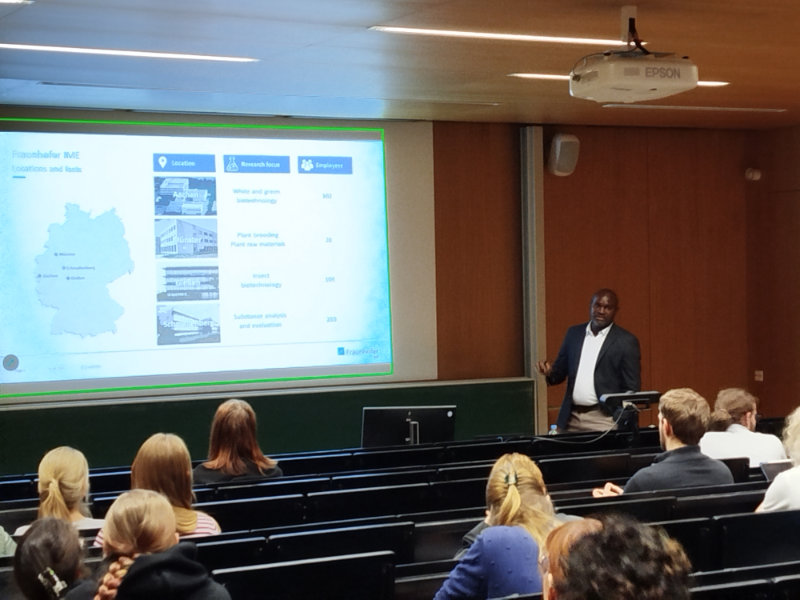
On 16 June, we were pleased to welcome Dr. Che Juius Ngwa from the Fraunhofer Institute for Molecular Biology and Applied Ecology, Aachen as our guest speaker for the Graduate Colloquium Bioeconomy Lecture Series. His visit provided an inspiring opportunity for scientific exchange on the rapidly evolving field of cultured meat.
The day began with a relaxed lunch attended by seven researchers, providing an excellent opportunity for informal discussions and networking.
After lunch, our guest visited the laboratory of Professor Längst, who introduced his current malaria research. This was of particular interest, as Dr. Ngwa had also completed his PhD on malaria, leading to an engaging scientific exchange.
The visit continued with a round-table discussion involving interested PhD candidates and students. Together with Dr. Ngwa, participants explored the opportunities and challenges of cultured meat, discussed how our eating habits may evolve in the future, and considered ways to make meat consumption more sustainable. In a relaxed atmosphere over a cup of coffee, participants had the opportunity to ask questions and exchange ideas about the future of meat production.
The visit concluded with a highly engaging lecture on the rapidly evolving field of cultured meat. The presentation highlighted how the growing global demand for meat, together with the environmental, ethical, and public health challenges associated with conventional livestock farming, has intensified the search for sustainable alternative protein sources. Cultured meat, produced through the in vitro cultivation of animal cells, was presented as a promising technology with the potential to reduce greenhouse gas emissions, lower land and water use, improve animal welfare, and contribute to future food security. The lecture also provided an overview of the scientific and technological foundations of cultured meat production, including cell sourcing, cell line development, tissue engineering, scaffold design, and scalable bioprocessing strategies.
Following the inspiring lecture, the day concluded with a dinner attended by our guest and interested PhD students, offering further opportunities for lively discussions and networking in an informal setting.
We sincerely thank Dr. Che Julius Ngwa for accepting our invitation and for sharing his expertise, giving us valuable insights into the fascinating and rapidly developing field of cultured meat.
 |
 |